




Electro-Mechanical Technologies
Duration: 9 Months
Campus Availability:Jacksonville, FLTulsa, OKHouston, TX
TWS is the right choice

Over 37,000¹
Graduates

Over $7 Million
In Scholarships Available
Available scholarship amounts are estimated for the period of 1/1/2022 through 12/31/2022 for the Tulsa, Jacksonville & Houston campuses combined.
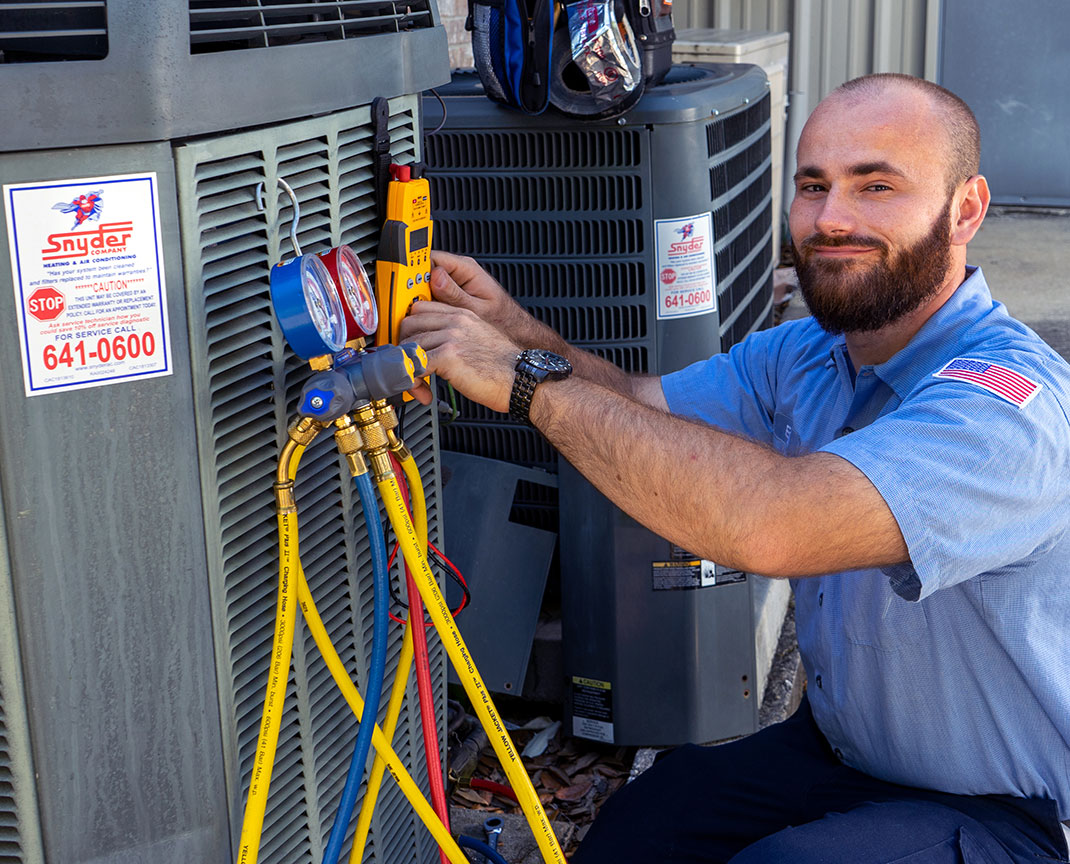
Climate control is almost everywhere. Installation, service and maintenance technicians can get their start by enrolling in the Electro-Mechanical Technologies program at TWS Tulsa, Jacksonville and Houston.
The Electro-Mechanical Technologies program focuses on the technologies of today and of the future. Along with HVAC/R, this program teaches the fundamentals of electricity, residential and commercial wiring and comfort systems. This program also introduces students to solar energy technology and provides an overview of photovoltaic (PV) science.
Available at our Tulsa, Oklahoma, Jacksonville, Florida, and Houston, Texas, Campuses
The Electro-Mechanical Technologies program can be completed in as little as nine months. Our industry-seasoned instructors will prepare students with hands-on training not just in mechanical technology, but also solar and HVAC/R technology.
Graduates of the EMT program will be ready to pursue a number of different career paths:
- HVAC/R technician
- Power plant field technician
- Commercial Service Technician
- Air Conditioning Technician
- Maintenance Electrician
- HVAC Service Technician
- Refrigeration Service Technician
- Commercial Refrigeration Technician
- Low-Temperature Field Technician
- Restaurant & Retail Refrigeration Technician
Employment is Expected to Grow for HVAC/R in the US by 40,1000 Jobs by 2031!i
Flexible Class Schedules
TWS offers flexible schedules whether you are just graduating from high school, changing your career, or transitioning from military to civilian life. We work hard to find the right program and the right schedule to help you succeed. Contact us for more information on upcoming class times and start dates for the Electro-Mechanical Technologies program.
Request More Info
-
 Take a Virtual Tour
Virtual Tour
Take a virtual tour of our campuses! Explore the classrooms, labs and shop floor with our unique interactive experience.
-
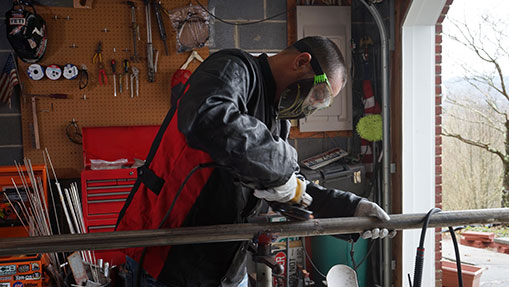
Employer Partnerships
TWS has partnerships with major employers across the United States. Our dedicated Career Services team will be there to support you every step of the way after graduation.
-
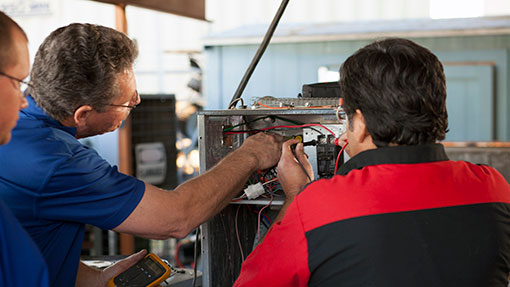
The Right Tools for the Job
When you begin your education at TWS, we provide you with an extensive gear package. You get the high quality professional tools you need to succeed. Ask your Admissions Representative for more information about the gear package for your program.
-
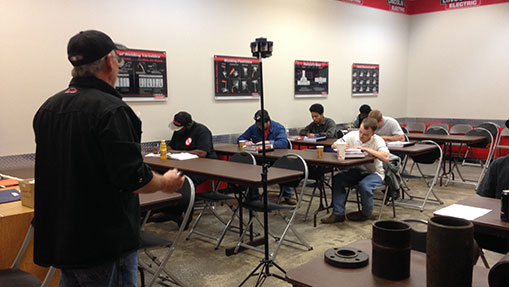 Learn More
Scholarship Opportunities
Learn more about what scholarship opportunities are available and how you might qualify for one. Start the process of applying for a scholarship today!
Upcoming Class Start Dates
| Class | Location | Date |
|---|---|---|
| Classes Start | Tulsa, OK | 05/06/2024 |
| Classes Start | Jacksonville, FL & Houston, TX | 05/17/2024 |
| Classes Start | Tulsa, OK | 06/04/2024 |
| Classes Start | Jacksonville, FL & Houston, TX | 06/17/2024 |
Tulsa, OK Class Schedules
| Morning (M-F) | Afternoon (M-F) | Evening (M-F) |
|---|---|---|
| 7:30am-12:30pm | 1:00pm-6:00pm | 6:30pm-11:30pm |
Jacksonville, FL Class Schedules
| Morning (M-F) | Afternoon (M-F) | Evening (M-F) |
|---|---|---|
| 7:30am-12:30pm | 12:45pm-5:45pm | 6:00pm-11:00pm |
Houston, TX Class Schedules
| Morning (M-F) | Afternoon (M-F) | Evening (M-F) |
|---|---|---|
| 7:00am-12:00pm | 12:45pm-5:45pm | 6:30pm-11:30pm |
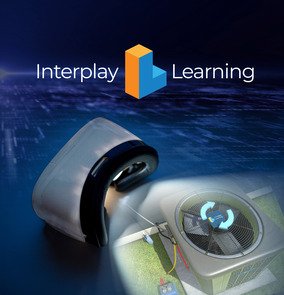
Students Get a Meta Quest 2 loaded with Access to Interplay Virtual Reality Training!
Train anywhere. Anytime.
Students of the Electro-Mechanical Technologies Training program will have the Interplay Learning virtual reality training simulator available to enhance skills learned. Interplay simulates the experience of Electrical, HVAC training via VR to help students learn trouble-shooting techniques, even when they’re away from school. A Meta Quest 2 is part of the gear package for this program and Interplay Learning is included as part of the course materials for all students.
Program Courses
Fundamentals of Electricity
This course provides students with a basic understanding of electricity. Instructors will teach schematic wiring, test meter usage and safety processes for handling electrical systems. Students will work with dual voltage systems commonly found in HVAC/R equipment and learn about control circuit wiring and high voltage wiring.
HVE100
- 4 Semester Credit Hours
- 90 Lecture Hours
- 10 Lab Hours
- 100 Total Contact Hours
- 14.5 Outside Prep Hours
Fundamentals of Solar
Students will learn the concepts and processes of photovoltaic systems, including their design and installation, through lectures and hands-on lab exercises. This course also teaches solar energy systems’ conceptual, mechanical and electrical design, as well as wiring and electrical issues that can arise.
HVE110
- 4 Semester Credit Hours
- 60 Lecture Hours
- 40 Lab Hours
- 100 Total Contact Hours
- 9.5 Outside Prep Hours
Electrical Wiring – Residential
This course uses the most current version of the National Electrical Code Book as a guide while instructing students on the basics of residential wiring, electrical safety and personal protective equipment. In this course, students will wire a scaled-down three-bedroom home. Students will also learn how to safely place all wiring, circuits, switches, receptacles, lighting fixtures and GFCI devices in the trainer according to the electrical code.
HVE120
- Prerequisite Course(s): HVE100
- 4 Semester Credit Hours
- 30 Lecture Hours
- 70 Lab Hours
- 100 Total Contact Hours
- 15 Outside Prep Hours
Electrical Wiring – Commercial
This course is a deeper dive into the National Electrical Code book. Students will learn about load calculations, blueprint reading, cost estimation, three-phase motor wiring and conduit manipulation. Students will also wire a commercial building with lighting in accordance with the applicable codes.
HVE130
- Prerequisite Course(s): HVE100
- 3.5 Semester Credit Hours
- 25 Lecture Hours
- 75 Lab Hours
- 100 Total Contact Hours
- 20 Outside Prep Hours
Fundamentals of Refrigeration
This HVAC/R class teaches students the mechanical and physical properties of the refrigeration cycle. Students will also be introduced to important tools used in the refrigeration industry:
- Manifold gauge set
- Vacuum pumps
- Service wrenches
- Charging
- Recovery equipment
Fundamentals of Refrigeration also teaches students the necessary safety precautions to take when handling refrigerant and working in close proximity with rotating machinery.
HVR100
- 4 Semester Credit Hours
- 90 Lecture Hours
- 10 Lab Hours
- 100 Total Contact Hours
- 8 Outside Prep Hours
Comfort Systems – Residential
This HVAC/R course trains students in building schematics and wiring air conditioning and heating systems. Students will also gain experience in working with:
- Residential split systems
- Packaged heat pump systems
- Air conditioners
- Gas furnaces
- Evaporative coolers
- Gas piping, sizing and installation
HVR110
- Prerequisite Course(s): HVE100, HVR100
- 4 Semester Credit Hours
- 60 Lecture Hours
- 40 Lab Hours
- 100 Total Contact Hours
- 6 Outside Prep Hours
Comfort Systems – Commercial
In this HVAC/R course, students will learn how to safely remove and replace components in residential and HVAC systems like fan motors, fans, electrical components and compressors. They’ll also learn about brazing techniques with oxy/acetylene, refrigerant piping manipulation and air balance.
Students in this course will be tested on R410a. If successful, they will receive an R410a safety certification and EPA section 609 certification.
HVR120
- Prerequisite Course(s): HVE100, HVR100
- 4 Semester Credit Hours
- 60 Lecture Hours
- 40 Lab Hours
- 100 Total Contact Hours
- 20 Outside Prep Hours
Refrigeration Systems & Practices
Students will learn how to maintain, monitor and manage residential and commercial-grade walk-in refrigerators and freezers. Some of the hands-on instruction in this course includes changing out compressors and servicing critically charged systems to enhance students’ understanding of mechanical and electrical troubleshooting.
HVR130
- Prerequisite Course(s): HVE100
- 4 Semester Credit Hours
- 60 Lecture Hours
- 40 Lab Hours
- 100 Total Contact Hours
Advanced Troubleshooting Techniques
This HVAC/R course has students training with the E-STAR Trainer, equipment developed to help students hone their electrical and troubleshooting skills. Students will also study mechanical troubleshooting, schematic wiring and the operation and maintenance of reciprocating liquid chillers.
This class also gives students the opportunity to qualify for EPA section 608 certification.
HVR200
- Prerequisite Course(s): HVE100
- 4 Semester Credit Hours
- 70 Lecture Hours
- 30 Lab Hours
- 100 Total Contact Hours
- 15 Outside Prep Hours
Sound Interesting? Contact us for more information on this course and the Electro-Mechanical Technologies Program
Interested in a Different Program? Select One Below:
 Get Started